
Sysman
A system monitor for Linux that remembers — a crash-proof collector daemon and a native app to explore what happened.
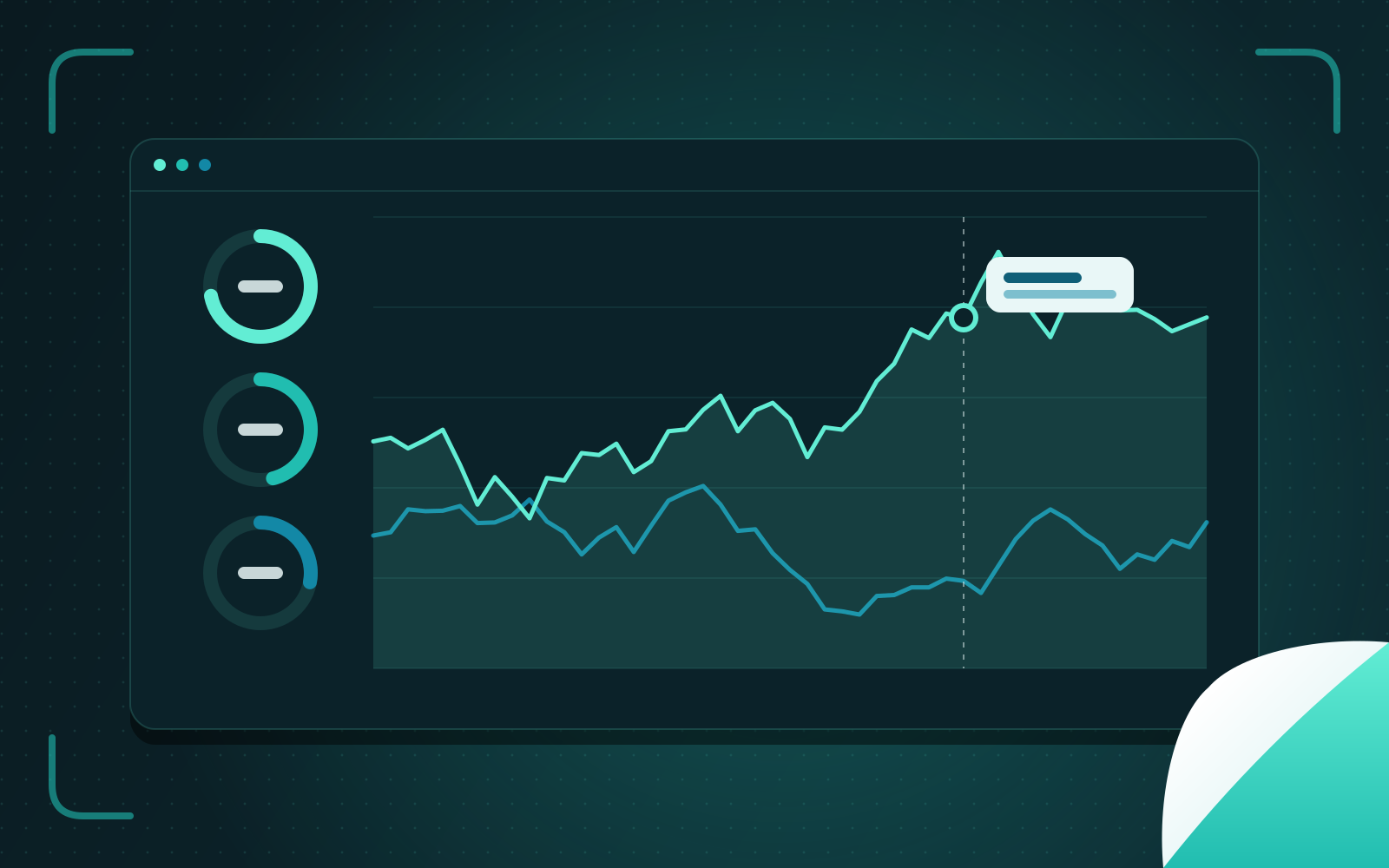
Sysman is a Linux system monitor in Rust with three parts — a collector daemon that samples the machine every two seconds and keeps history in SQLite, a native GPU-accelerated app built on GPUI to explore it, and an optional, tightly confined helper for the readings that need root. Its first rule is that the last reading before a crash is already on disk.
Monitors forget
Every administrator knows the moment: a machine froze, rebooted, or crawled for twenty minutes, and by the time you look,
every monitor on it shows a calm present. top tells you about now. Proper fleet monitoring tells you about servers,
and rarely about the desktop you actually work on. I wanted the history — on my own machine, in open formats, with no
account and no telemetry — and I wanted it to survive the very event I was trying to diagnose.
Sysman splits the job in three:
sysmand, a collector that runs as a systemd user service. Every two seconds it samples CPU, memory, pressure, sensors, GPUs, disks, network, processes and more; it writes a crash log, stores history in SQLite, and serves live data over a Unix socket.sysman, a native desktop app built with GPUI, the GPU-accelerated toolkit behind the Zed editor, with eleven views: Dashboard, Processes, GPU, Energy, Network, Disk with a disk map, Hardware, Explorer, Insights, Logs and Groups.sysman-helper, optional, off by default, for the few readings that genuinely need root.
Two non-negotiables
The design document begins with two rules, and everything else follows from them.
“The last reading before a crash is on disk.” Each sample is appended to a JSON Lines log and fdatasync’d before the
next tick. SQLite has its own thread and a bounded queue; if it ever falls behind, records are dropped and counted,
“so the database never delays the crash log.” After a hard reset, the last lines of the log tell you which way it went:
temperatures climbing points at cooling, everything flat points at the power supply, a burst of GPU errors points at the
driver.
“One failing source does not stop the others.” Every collector runs on its own worker thread. Ticks align to the wall
clock; a module that misses its deadline — three quarters of the interval — is recorded as late, and its reply discarded.
Panics are caught. A GPU driver that hangs is the classic case: NVML is called on an inner thread with a one-second
deadline, and after its first hang it is abandoned for nvidia-smi, run as a child process that is killed if it, too,
takes longer than a second. A GPU that has powered itself down is never polled awake.
Honest numbers
Sysman refuses to show a misleading zero: values that need root are shown as not permitted. A typo in the configuration stops the daemon, “so a typo cannot silently switch something off.” And the daemon is held to a footprint budget — every collector change is measured for CPU and memory before and after, and judged “for a modest laptop rather than for the machine it was measured on.”
That budget caught real costs. One family of motherboard sensor chips was being read over port I/O so expensively that polling it cost about 4.6% of a core; those chips are now read every ten seconds by default. Following the system journal initially cost around 120 MB of memory; reopening only the files that are actually growing brought it to about 7 MB. The reference measurement is about 2.6% of one core, 85 MB of memory and 23 threads on a 32-thread desktop with around 700 processes.
History that stays useful
Series are named by JSON pointer and devices keyed by stable identifiers, never by position, so adding a disk doesn’t scramble a year of charts. Raw points are kept for 48 hours, one-minute roll-ups for 90 days and fifteen-minute roll-ups for two years; a restart rebuilds any half-finished minute from raw points, “so a restart loses nothing.” Process identity is the PID plus its start time, so a reused PID is never confused with the process that had it before. The database grows by adding columns and is never rebuilt.
“Why is this running?”
The feature I am proudest of answers the question every administrator asks about an unfamiliar process. Sysman classifies
a process from its cgroup and its parent chain — a systemd service, socket-, timer- or D-Bus-activated, a login autostart,
an app, a terminal job, an orphan, a container (Docker, Podman, Kubernetes), Flatpak, Snap, cron or the kernel — and shows
the evidence. It then explains what happens if you end it: whether systemd will restart it, based on the unit’s
Restart= policy and the difference between a clean SIGTERM and a SIGKILL. The rule is written into the design:
“Facts only: every cause names its evidence, and what cannot be known is said.”
The Logs view applies the same principle to the journal and package-manager history together, surfacing what is worth a look: crashes folded per program, OOM kills, failed units and restart loops, unclean shutdowns, GPU faults, disk and NVMe errors, thermal throttling and repeated failed sign-ins.
A root helper that knows its place
Some readings need privilege: SMART data, energy counters, other users’ I/O, and per-process network traffic. The helper
reads NVMe health through an admin ioctl and SATA drives through smartctl in a mode that won’t spin up a sleeping disk,
and counts network bytes per process with eBPF — one program per kernel signature, chosen at load time from the running
kernel’s BTF, so it works across kernel versions. It runs under systemd with an allow-list of capabilities, a read-only
system, no network, and no writable-and-executable memory; it answers one request per second per connection, eight
connections at most. And it reports which processes are listening on ports, never their connections, because joining
connections to processes “would tie every user’s remote peers to processes.”
Built like infrastructure
Sysman has 823 tests. Collectors are tested against fixture /proc and /sys trees, every collector’s output round-trips
through shared schema types, and each journal rule has a test built from a real entry. Release CI builds inside Ubuntu
22.04 to hold the glibc floor, then install-tests the Debian package in fresh Ubuntu 22.04, Debian 12 and Ubuntu 24.04
containers — checking linked libraries and clean removal — and only marks a release as latest once every artefact is
uploaded. It ships for Arch (sysman, sysman-bin), Debian and Ubuntu, and as a checksum-verified installer that refuses
to run over a package-manager install.