
rrussat
A peer-to-peer, end-to-end encrypted messenger with a terminal client and an app for Linux, macOS, Android and iOS — and no application server in the middle.
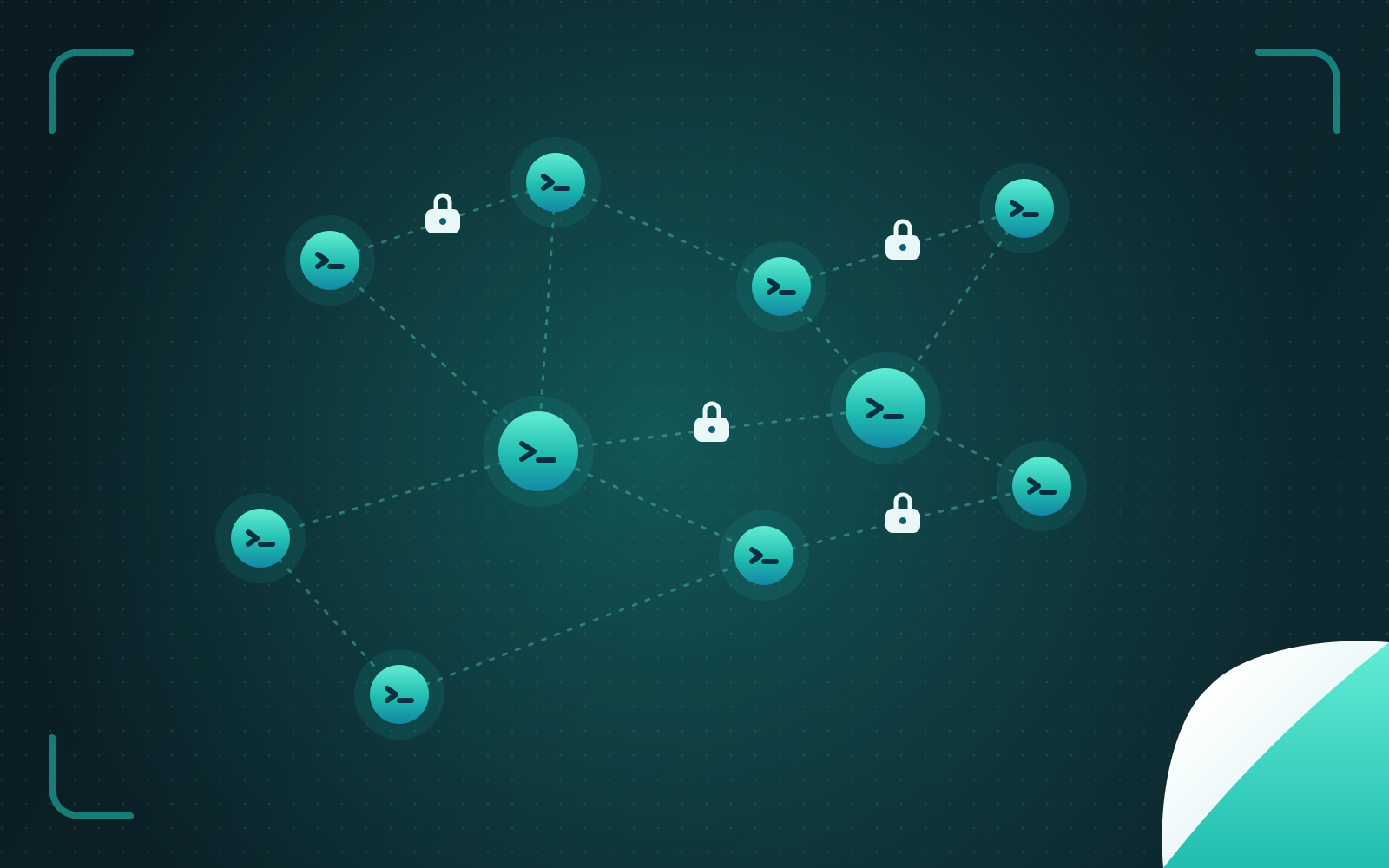
rrussat is a one-to-one messenger built in Rust on iroh and QUIC. Identities are keypairs, pairing is a QR code or a line of text, messages are protected with X3DH and a Double Ratchet, and history lives in a local SQLite file sealed under a passphrase. It is an exercise in applied cryptography and honest engineering, not an audited security product — and it says so.
The question
How small can a private messenger be? rrussat is my working answer: no accounts, no application server, two people talking to each other directly. “No application server is involved.” Your identity is a keypair generated the first time you run it, and you pair with someone by showing a QR code — or the same ticket as plain text, because “a TUI has no camera.”
It is also a deliberate exercise in a discipline I value: being exact about what a system does and doesn’t promise. The README says plainly, “This is a personal project, not an audited security tool.”
Honest about “no server”
Peer-to-peer systems love to claim there is no server. rrussat doesn’t: ”‘No server’ holds for message content, not for
NAT traversal.” Connections are made with iroh over QUIC, where the endpoint identifier is an Ed25519 public key, so
dialling by public key is built in. Peers are found three ways — mDNS on the local network, the Mainline DHT, and a relay as
the fallback. Relays never see plaintext, “but they are still servers”, so every contact shows which path is live:
DIRECT, LAN, RELAYED with its region, or OFFLINE, rather than papering over the difference.
The same honesty runs through the interface. A message stays queued until it has genuinely left the device — “Claiming ‘sent’ optimistically would be a small lie exactly when the peer is unreachable.”
The cryptography
Sessions begin with an X3DH handshake using a separate X25519 identity key, a signed prekey and an ephemeral key, and continue with a Double Ratchet. Every derivation is HKDF-SHA256 with its own label; messages are sealed with ChaCha20-Poly1305. Receipts, typing and presence travel inside the ciphertext, so the shape of a conversation doesn’t leak through frame types. Trade-offs are written down as decisions rather than left as gaps: there are no one-time prekeys, because a serverless design has nowhere to publish them.
History is kept in a single SQLite file sealed with XChaCha20-Poly1305 under a key derived from your passphrase with Argon2id. Every sealed value carries its context as associated data, so a blob moved to a different column won’t decrypt. And there is an invariant I would underline for anyone implementing a ratchet: the ratchet state is saved in the same transaction as the message that advanced it, and decryption works on a copy, so “one injected frame cannot desynchronise a session.”
Four bugs between “queued” and “delivered”
The very first day produced the most educational fix in the project. Four separate faults stood between a queued message
and a delivered one: there was no signal that the other side had accepted the session (fixed with a Ready frame, where
“refusal is the absence of the frame”); messages were dequeued before they were written; two peers dialling each other at
once could livelock (resolved by letting “the connection dialled by the smaller endpoint id” win); and a standoff where both
sides waited for the other to speak first. The underlying lesson is one every network engineer learns eventually: a write
that succeeded locally only means the bytes are in a buffer.
Tests that test themselves
rrussat has 330 tests, and they are mutation-checked — deliberately breaking the code to make sure the tests notice. That process found two security tests that “were passing for the wrong reason”, and the architecture notes keep the conclusion: “A security test that cannot fail is worse than no test.” Even the QR code is verified: the half-block characters drawn in the terminal are rebuilt into an image and decoded, to prove the code a phone would scan is the code you meant.
One core, two clients
The cryptography, networking and storage live in a core crate with no UI dependency. A terminal client built on ratatui and a Flutter app for Linux, macOS, Android and iOS sit on top of it through a generated bridge. The app adds what a phone needs — camera QR scanning, a keyring or biometric-gated key cache, notifications and a background service — while the terminal client offers clipboard copy that works over SSH and tmux. Attachments and voice messages are sealed once per file and fetched over a separate stream, resumable and authenticated by a digest that arrived through the ratchet first.
rrussat is an experiment, licensed WTFPL, with no public distribution channel yet. Group chat, video and multi-device sync are explicitly out of scope.